Forest/Nature Schools
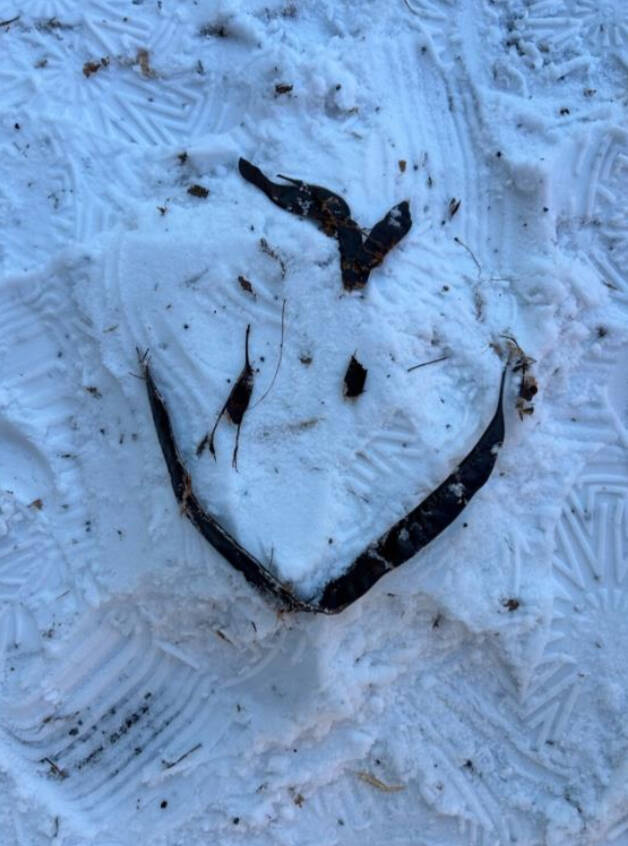
The pictured activity, as noted in the
Forest/Nature Schools framework “Takes place in
any outdoor space, including urban greenspace,
playgrounds” (Child and Nature Alliance of
Canada, 2020, p. 1). This outdoor enclosure is, as
emphasized by Forest/Nature Schools
frameworks, a part of “a sustained process of
regular and repeated sessions in the same outdoor
space, supporting children to develop a reciprocal
relationship with the Land, and an understanding
of themselves as a part of the natural world
(Child and Nature Alliance of Canada, 2020, p.
1). The activity began because the children
verbally expressed the desire to build a snowman,
and so met the standard set by Forest/Nature
Schools frameworks that “children’s play [is]
self-directed, freely chosen, intrinsically
motivated” (Child and Nature Alliance of
Canada, 2020, p. 2). Due to the nature of their
desired activity, it certainly met the Forest/Nature
Schools standard as it “Relies on loose, natural
materials to support open-ended, creative play
and learning” (Child and Nature Alliance of
Canada, 2020, p. 2)
Indigenous Early Learning and Child Care Framework

This interactive puzzle and story engaged the
children on several planes and with the voices of
Indigenous people front and centre as noted in the
Indigenous Early Learning and Child Care
Framework “rooted in First Nations knowledge,
language and culture; guided by Indigenous
practices in childhood development; and
strengthened by partnerships with governments,
service delivery organizations and community
members” (Government of Canada, 2018, p. 1).
There was also care taken to ensure the
distinction was made as the Indigenous Early
Learning and Child Care Framework “recognizes
the importance of implementing distinctions-
based frameworks based on the rights, interests
and circumstances of First Nations, Inuit and the
Métis Nation” (Government of Canada, 2018, p.
5). In this case Anishinaabe First Nation’s Elder
called Edna (Manitowabi, 2020), as her version
of the story of the medicine wheel is shared. First
an acknowledgment and group thank you to Edna
(they all said “Thank you Edna”). Then with the
prop of a stuffed otter and four seashells the story
of Little Boy Water Drum and the otter making
the shape of the medicine wheel in the water as
he swam in all four directions and then to centre,
collecting seashells in each direction. The
children were engaged listening and excited to
give the otter a hug when the softy was done.
Then the book “grandfather what is a medicine
wheel” was read and put on the puzzle table for
further exploration. Each of the seashells had the
teachings of each of the directions and the book
expanded on a beginner understanding of these
meanings like the seasons. To grasp the laminated
photo aids and match them to the page in the
board book they belonged to, gradually gave
them confidence in identifying a visual match and
beginning of meaning. By utilizing all these
methods to tell Elder Edna’s story, the Indigenous
Early Learning and Child Care Framework was
successfully integrated in “Enabling and
supporting flexible ELCC programs and services
that are responsive to the unique needs of a child,
family or community” (Government of Canada,
2018, p. 7)
Anti-Bias Education

This activity was brought to the art table the day
after the children were practicing tracing plastic
letters. There was an array of skin-tone crayons
and sheets of paper. A demonstration was given of
different ways to identify their skin tone and trace
their hand. This prompt was a marker of the
activity landing in the anti-bias framework
because, “planned anti-bias teaching experiences,
[include] mixing paint to match skin color” (Kuh
et al., 2016, para. 4). Every child was able to find a
great match for their skin tone and make some
marks around their hand pressed to the paper. After
each child was finished, they got two stickers one
for their physical hand and one for their drawing of
their hand. This was done for every child who
came to the table. Every colour of hand was able to
be represented and affirmed as equally deserving
of a sticker. The sticker also strengthened their
understanding of the fact that their representation
of their hands and their physical hands are
connected. Overall, it was a demonstration of anti-
bias education as “It helps children learn to be
proud of themselves and their families, respect a
range of human differences, recognize unfairness
and bias, and speak up for the rights of others”
(Kuh et al., 2016, para. 2).
References
Child and Nature Alliance of Canada. (2020). Principles of Forest/Nature School. https://childnature.ca/wp-
content/uploads/2021/02/2020-Principles-of-Forest_Nature-School-.pdf
Government of Canada. (2018). Indigenous early learning and child care framework.
https://www.canada.ca/content/dam/canada/employment-social-development/programs/indigenous-early-learning/1352-
IELCC_Report-EN.pdf
Kuh, L. P., Leekeenan, D., Given, H., & Beneke, M. R. (2016). Moving beyond anti-bias activities: Supporting the development of
anti-bias practices | NAEYC. Naeyc.org. https://www.naeyc.org/resources/pubs/yc/mar2016/moving-beyond-anti-bias-
activities
Manitowabi, E. (2020, February 10). The creation story and seven grandfather teachings. [Conference session]. Indigenous Education
& Engagement Traditional Teaching Series, Humber College: Etobicoke, ON.
https://humber.ca.panopto.com/Panopto/Pages/Viewer.aspx?id=99ab15ef-bd72-4959-ba7a-adbf013aa75
Add comment
Comments