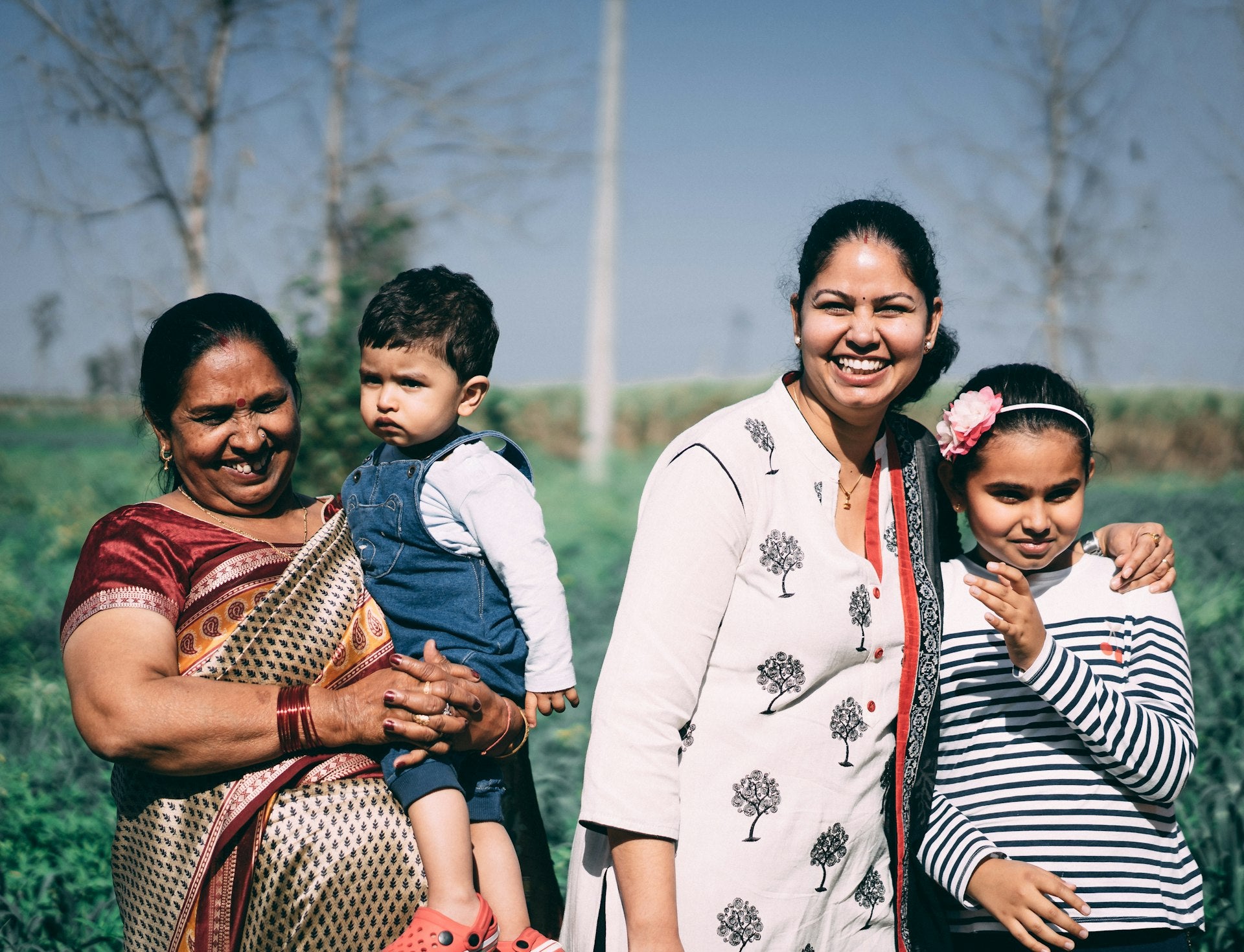
KEY FAMILY TYPES
1. Indigenous families
2. Newcomer families
INDIGENOUS FAMILIES
"FROM 2016 TO 2021, THE NUMBER OF INDIGENOUS PEOPLE
WHO REPORTED THAT THEY COULD SPEAK AN INDIGENOUS
LANGUAGE WELL ENOUGH TO CONDUCT A CONVERSATION
DECLINED BY 4.3%.
HOWEVER, THE NUMBER OF INDIGENOUS PEOPLE WHO
COULD SPEAK AN INDIGENOUS LANGUAGE BUT DID NOT
HAVE AN INDIGENOUS MOTHER TONGUE GREW BY 7.0% OVER
THE SAME PERIOD"
(STATISTICS CANADA, 2022B, PARA. 87).
UNPACKING THE FINDINGS ON INDIGENOUS FAMILIES
I found these findings fascinating, especially how Indigenous people who were
connected in their community could seek out learning their language as a second
language. Although they cannot learn it from their primary caregivers, they are
able to outsource the teachers and experience this reconnection with their
culture. Statistics Canada (2022b) stated "This change reflects a growing share
of Indigenous people who are learning an Indigenous language as a second
language" (para. 87). Early education centres like Aboriginal Head Start
and roles like Indigenous Resource Consultants can be community connection
points for the whole family to reconnect with their Indigenous language and
assist in the facilitation of developing it as an active second language. Focusing
on language inclusion in early learning environments (Chumak-Horbatsch &
Chung, 2016) is stressed by the numbers showing Indigenous language declining
as a mother tongue.
NEWCOMER FAMILIES
"ACCORDING TO THE 2021 CENSUS, 8,361,505 PEOPLE, THAT IS, 23.0%
OF THE POPULATION, WERE FOREIGN-BORN (IMMIGRANTS)...RECENT
IMMIGRANTS MADE UP 15.9% OF THE IMMIGRANT POPULATION"
(STATISTICS CANADA, 2022A, PARA 1).
"IN APRIL 2024, A LARGER PROPORTION OF RECENT IMMIGRANTS
(43%) REPORTED FINDING IT DIFFICULT OR VERY DIFFICULT TO MEET
THEIR FINANCIAL NEEDS OVER THE PAST 12 MONTHS, COMPARED
WITH MORE ESTABLISHED IMMIGRANTS (29%) AND NON-IMMIGRANTS
(29%)" (STATISTICS CANADA, 2024, PARA. 3).
UNPACKING THE FINDINGS ON NEWCOMER FAMILIES
I found it noteworthy that the more established immigrants and the
non-immigrants reported the same amount of difficulty making ends
meet, while a significantly larger number (14% higher) of
newcomers reported difficulty making ends meet. Statistics Canada
(2024) clarified the exact question posed to collect their data "In the
past 12 months, how difficult or easy was it for your household to meet
its financial needs in terms of transportation, housing, food, clothing
and other necessary expenses?" (para. 13). The question highlights the
essential needs that newcomers could very well be struggling to
consistently secure. This is where our role as a well-connected
community member in the ECE field comes in, because we can offer
information about resourcing these items and programs (like settlement
programs) that can counteract the challenges stacked against them
developing a steady income.
ISSUES AND CHALLENGES FOR INDIGENOUS FAMILIES
Assimilation into the "dominant culture," and reactive staff that enact what some folks
describe as kidnapping by the state when referring to the intervention of child and family
services (Ball & Benoit-Jansson, 2022) are the main challenges for Indigenous families in an
early learning and care environment. The loss of language and other cultural practices for
Indigenous families in early learning environments is in part due to the assimilation
approach of being "monolingual, mono-literate, and mono-cultural" (Chumak-Horbatsch &
Chung, 2016, p. 15). In many centres they are teaching the "majority language" and facets
of the "dominant culture" more or less exclusively. In addition, there have been several
reports of Indigenous families being misrepresented to child and family services which
causes drastic interventions to become commonplace (Ball & Benoit-Jansson, 2022). The
families share their disappointment in the reactive early learning staff and child and family
services and compare the speed and willingness that they are removed from their family unit
to the original assimilative governmental procedures.
ISSUES AND CHALLENGES FOR NEWCOMER FAMILIES
The information from Statistics Canada (2024) about the level of difficulty in securing basic needs
points to another main challenge that is finding a job (Hornstein, 2024). Hornstein (2024) shares how
newcomers "may encounter obstacles to having their credentials recognized and finding meaningful
Canadian work" (para. 16). In addition to their credentials potentially not transferring over to an
appropriate equivalent in the eyes of hiring committees, "many jobs in Canada require English or
French and either of these languages can be one of the primary requirements in a job description"
(Hornstein, 2024, para. 3). The expectation to be near-fluent in one of "the official languages in
Canada" (Hornstein, 2024, para. 3) is a steady challenge that impedes on the quality of job
newcomers may be able to secure. These difficulties can affect their experience to feel secure paying
for the services in an early learning and care environment. Due to the potential communication
barrier, clearly understanding the regulations and expectations in Canadian early learning
centres can be another source of stress.
RESPONSIVE INCLUSIVE STRATEGIES FOR INDIGENOUS FAMILIES
• To combat assimilative patterns a strategy that an Early Childhood Educator (ECE) can
implement is an actively intercultural and multilingual program (Chumak-Horbatsch &
Chung, 2016, p. 15). This includes small changes like name tags with children's names
written in their Indigenous language and dual-language books featuring several
Indigenous languages that represent the families we are serving. The larger changes
involve working closely with the families who are willing to be consulted to expand the
intercultural programming, which can look like inviting Elders from the child's Indigenous
community into the classroom to spend time with the children and share songs or stories
in their language.
• When there is confusion about differences in cultural practices, another advisable practice
is "engaging in open dialogues to identify and address microaggressions, and reflecting
critically on the system of social inequities" (Daha, 2016, p. 64). Open communication and
active reflection are cornerstones of this strategy that make the early learning
environment a safer place for Indigenous children and families.
RESPONSIVE INCLUSIVE STRATEGIES FOR NEWCOMER FAMILIES
• To address the potential difficulty with employment and unideal hours, a strategy that an
Early Childhood Educator (ECE) can implement is flexible and personalized support (S.
Sheikh, personal communication, November 28, 2024). This includes working with the team
of ECEs at the centre to optimize how are we honouring the family's schedule and
addressing the time-based components of our care like pick-up, drop-off and meetings. If
need be we can implement accomodations on our end so they can meet their life's
demands.
• Another tool ECEs can implement is respecting differing parenting styles (which may be
highly accepted and successful in their cultural community) and "differ judgement” (S.
Sheikh, personal communication, November 28, 2024). While it is helpful to share what we
know about the Canadian educational system and help build their capacity by role
modelling our tools that they can chose to mimic with their child, it is just as crucial to
learn about how they navigate their routines, and how they redirect and guide their child.
COMMUNITY AGENCIES FOR INDIGENOUS FAMILIES
Shaawnaong Aboriginal Head Start
935 Dundas Street, Toronto, ON M4M 1R4
8:30 a.m.–4:30 p.m. Monday – Saturday
(416) 630-3423
Languages of service: English & Ojibway
Building Strong Spirits is an early intervention program for Aboriginal
children aged 2 1/2 to 6 years old, and their families. It is primarily a
preschool program that prepares young Aboriginal children for school by
meeting their spiritual, emotional, intellectual and physical needs.
Building Strong Spirits is a lifelong learning program that incorporates
the following components:
• Health
• Education
• Nutrition
• Culture and Language
• Parental Involvement
• Social
https://nativechild.org/ear
ly-years/aboriginal-
head-start/
The Building Strong Spirits programming offered at Shaawnaong Aboriginal Head Start
is particularly positive for Indigenous families because it proven to be "culturally and
linguistically relevant " (Government of Canada, 2017, para. 11). In addition, Ball & Benoit-
Jansson (2022) highlight that the "findings to date suggest correlations between culturally based
programming and resilience, a significant increase in children’s sense of belonging and pride in
their Indigenous identity, participation in First Nations cultural practices and languages outside
of the program, use of First Nations medicines and food, and increased self-esteem" (p. 10). The
documented benefits are synonymous with the promised programming Shaawnaong Aboriginal
Head Start offers.
NON-PROFIT COMMUNITY AGENCIES OR
ORGANIZATIONS FOR NEWCOMER FAMILIES
Community Family Services of Ontario
602 Queen St West, Toronto, ON M6J 1E3
Mon, Wed & Fri: 9 am – 5 pm
Tue & Thu: 9 am – 8:30 pm (after 5 pm by
appointment only)
416-979-8299
info@cfso.care
Languages of service: English, Afghan,
Cantonese, Chinese, Chinese - Simplified
(translation only), Chinese - Traditional
(translation only), Farsi (Persian), Fukinese,
Kurdish, Mandarin, other Chinese dialects,
other Middle Eastern languages, Persian,
Tagalog, Turkish, Vietnamese
Services include:
• Information and Referral for:
Immigration / Refugee / Citizenship /
Foreign Domestic Worker
• Welfare & benefits, public health,
childcare, legal aid, housing,
community recreation
• Education and employment training
• English classes
• Settlement Counselling
• Information and Orientation Workshops
• Settlement Interpretation and Translation
The Community Family Services of Ontario offers its settlement services in over 10 different
languages which virtually dissolves the communication barrier and gets right to the tailored
assistance newcomer families need. Hornstein (2024) notes the reported benefits of these
services and that "among those who received employment-related services, 78% credited
settlement services for equipping them with the knowledge, skills, and connections crucial for
success in the Canadian labour market" (para. 20). There are also referral programs that can
help newcomers connect to specialized support workers for more complex government-related
tasks or inquiries. In addition to these services, there are communication enhancing offerings
like interpreters, translations and English language classes.
PERSONAL SOCIAL FAMILY IDENTITY
As a gender nonconforming lesbian partnered with a fellow gender nonconforming
lesbian (we are engaged), I am so grateful when I see several variations of families like
mine (with two moms/two dads and/or gender nonconforming parents) represented
throughout the classroom. Whether they are laminated photos, puzzles, or books, even
that visual recognition makes a difference. It can be a conversation starter, and for
some there can be the inlaid message that you can relax in that space to a certain
degree. It is a small gesture to have passive forms of representation like this, but if
there are multiple forms that include LGTBQ+ families who all look different, it still
combats stereotypes, and it can made folks like us feel like we are seen. I would also
love to see a more neutral caregiver appreciation day in addition to the other days the
centre may celebrate. I feel that takes the message of respect for gender
nonconforming caregivers into a more tangible plane.
COMMON FEATURES
ECEs can arrange their classroom and programming to be intercultural and honour
diverse families with respectful representation and family involvement. This can begin
on the "2D" plane of pictures on the wall and books on the shelf, and progress to days
of celebration (that could highlight family compositions that fall outside the nuclear
family composition for example). Language is very powerful when it comes to cultural
preservation because of the unique wisdom and perspective it contains (Ball & Benoit-
Jansson, 2022), therefore tools like dual language books and strategies like inviting
family members into the class to share food or stories expands the positive impacts of
intercultural planning. In addition, applying a trauma-sensitive "bedside manner" while
talking with families helps family members remain regulated during daily conversations
(S. Sheikh, personal communication, November 28, 2024). Learning to recognize and
respond the signs of dysregulation can be pertinent to resist re-traumatization (Sheikh,
2024), and the basic application of trauma-informed principles contribute to a
generally welcoming and safe environment.
16

Add comment
Comments